
Déjà Vu Before Marriage and Jamais Vu After Marriage
Why Does It Happen?
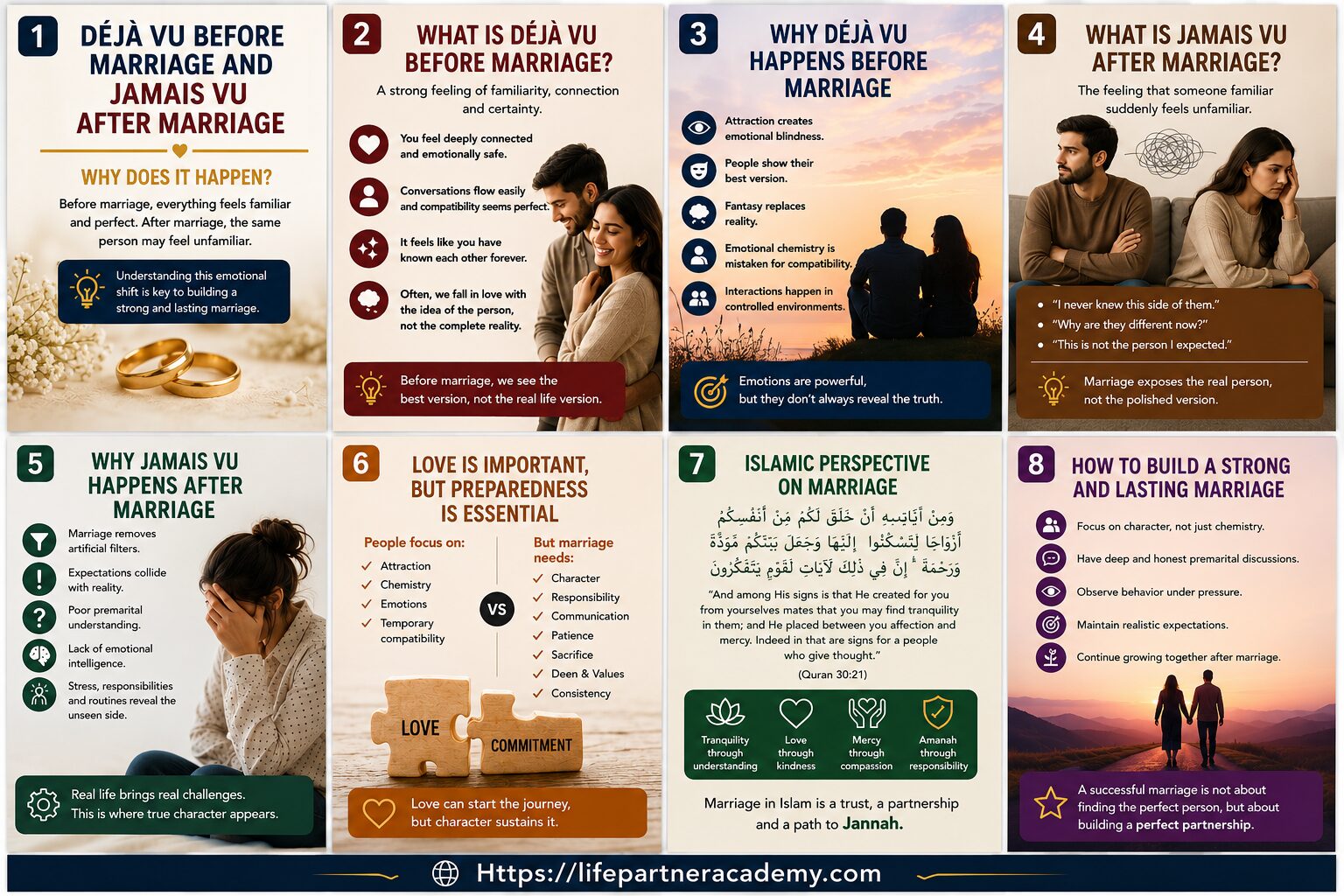
Introduction
Many marriages today begin with intense excitement, emotional attachment, and a strong sense of certainty. Couples often feel as though they have known each other forever. Conversations flow effortlessly, emotions feel magical, and compatibility appears perfect. Yet after marriage, some couples suddenly begin to feel unfamiliar with one another. Behaviors, habits, attitudes, and expectations that were never noticed before start surfacing. What once felt deeply familiar now feels strangely distant.
This phenomenon can be described metaphorically as “Déjà Vu before marriage and Jamais Vu after marriage.” The French term déjà vu means “already seen,” while jamais vu means “never seen.” In relationships, these expressions beautifully explain a common emotional transition:
- Before marriage, people often feel they already know and deeply understand each other.
- After marriage, they sometimes feel as though they never truly knew the person at all.
Why does this happen? Is it because people change after marriage? Or were certain realities hidden beneath emotions, attraction, and expectations? Understanding this phenomenon is important for building healthy marriages, realistic expectations, and long-term emotional stability.
What Is Déjà Vu Before Marriage?
Before marriage, many couples experience emotional familiarity very quickly. They feel:
- deeply connected,
- emotionally safe,
- highly compatible,
- and strongly attached.
This emotional closeness creates the illusion that: “This person completely understands me.” In many cases, people begin imagining a future based on emotions rather than complete reality.
Why This Happens
Attraction Creates Emotional Blindness
During courtship or engagement, attraction can overshadow critical evaluation. A person may overlook:
- anger issues,
- emotional instability,
- poor financial habits,
- lack of responsibility,
- communication problems,
- or incompatible values.
The brain naturally focuses on positive traits during emotional attachment. This is why many people later say: “I saw the signs before marriage, but I ignored them.”
People Show Their Best Version Before Marriage
Before marriage, individuals are usually more careful with:
- speech,
- appearance,
- manners,
- patience,
- and emotional reactions.
Arguments are limited. Sacrifices are easier. Tolerance is higher. Most interactions happen in controlled environments:
- phone calls,
- meetings,
- messages,
- outings,
- or family-supervised interactions.
Real life responsibilities are not yet fully visible.
Fantasy Replaces Reality
Many individuals unconsciously marry an “idea” of a person rather than the person themselves.
They create expectations such as:
- “Marriage will solve loneliness.”
- “Love alone is enough.”
- “We will always agree.”
- “Our marriage will be effortless.”
Social media, movies, unrealistic romantic culture, and fantasy-based expectations contribute heavily to this mind-set.
Emotional Chemistry Is Mistaken for Compatibility
Chemistry and compatibility are not the same thing.
Two people may:
- enjoy conversations,
- laugh together,
- feel emotionally connected,
- and still be completely incompatible in practical married life.
True marital compatibility involves:
- values,
- conflict management,
- financial discipline,
- emotional maturity,
- religious outlook,
- family expectations,
- communication style,
- and long-term life goals.
What Is Jamais Vu After Marriage?
After marriage, couples begin seeing each other continuously and under pressure. This is where “Jamais vu” appears: Familiar people suddenly feel unfamiliar.
A spouse may think:
- “I never knew this side of them.”
- “Why are they different now?”
- “This is not the person I expected.”
The reality is: many traits were always there, but marriage exposed them more clearly.
Why Jamais Vu Happens After Marriage
1. Marriage Removes Artificial Filters
Marriage brings daily exposure.
Now couples witness:
- stress,
- tiredness,
- financial struggles,
- anger,
- disappointment,
- routines,
- family conflicts,
- parenting discussions,
- and emotional weaknesses.
The polished version shown before marriage gradually fades. This does not always mean deception. Often, it simply means: Real life reveals deeper layers of personality.
2. Expectations Collide With Reality
One of the biggest causes of disappointment in marriage is unrealistic expectations.
Some expect:
- constant romance,
- nonstop attention,
- emotional perfection,
- instant understanding,
- or a conflict-free relationship.
But marriage includes:
- responsibilities,
- compromises,
- emotional labor,
- patience,
- and sacrifice.
When fantasy collapses, emotional unfamiliarity begins.
3. Poor Premarital Understanding
Many couples spend more time discussing:
- hobbies,
- favorite foods,
- entertainment,
- travel,
- and attraction,
than discussing:
- finances,
- emotional triggers,
- anger management,
- children,
- in-laws,
- religious values,
- responsibilities,
- and long-term expectations.
As a result, major incompatibilities emerge only after marriage.
4. Lack of Emotional Intelligence
Marriage requires emotional maturity.
Without emotional intelligence, couples struggle with:
- communication,
- empathy,
- conflict resolution,
- patience,
- and understanding.
A person may be kind during happy moments but become emotionally harsh under pressure. This creates emotional distance and unfamiliarity.
The Difference between Love and Preparedness
One of the greatest misunderstandings today is assuming that love alone guarantees marital success.
Love is important, but marriage also requires:
- discipline,
- responsibility,
- emotional regulation,
- maturity,
- mercy,
- and teamwork.
A person can deeply love someone yet still be unprepared for marriage. Similarly, attraction cannot compensate for:
- poor character,
- irresponsibility,
- dishonesty,
- selfishness,
- or lack of commitment.
Islamic Perspective on Marriage
In Islam, marriage is not merely a romantic arrangement. It is a sacred trust (Amanah). Allah describes marriage as a source of:
- tranquillity,
- love,
- and mercy.
However, these qualities are built through:
- patience,
- sacrifice,
- good character,
- communication,
- and taqwa.
A successful marriage is not sustained merely by emotions before marriage but by character after marriage. This is why Islam emphasizes:
- akhlaaq (character),
- deen,
- responsibility,
- honesty,
- and family values.
External attraction may initiate interest, but inner character sustains the marriage.
How to Reduce Déjà Vu Before Marriage and Jamais Vu After Marriage.
1. Focus on Character More Than Chemistry
Observe:
- honesty,
- humility,
- emotional stability,
- patience,
- and responsibility.
Character becomes more important than attraction in long-term marriage.
2. Have Deep Premarital Discussions
Discuss topics such as:
- finances,
- roles,
- children,
- career expectations,
- family involvement,
- religious goals,
- lifestyle,
- and conflict resolution.
Avoid entering marriage based only on emotions.
3. Observe Behavior Under Pressure
A person’s real character appears during:
- stress,
- anger,
- disappointment,
- delays,
- or conflict.
Do not evaluate someone only during pleasant moments.
4. Maintain Realistic Expectations
Marriage is not a fantasy world.
Every spouse has:
- strengths,
- weaknesses,
- habits,
- and emotional limitations.
Healthy marriages are built through realistic understanding, not perfection.
5. Continue Growing After Marriage
Marriage requires continuous effort.
Couples should:
- improve communication,
- increase emotional intelligence,
- strengthen spirituality,
- practice gratitude,
- and learn conflict management skills.
Strong marriages are developed intentionally over time.
Conclusion
“Déjà vu before marriage and jamais vu after marriage” reflects the emotional transition many couples experience between fantasy and reality. Before marriage, attraction, emotions, and expectations create a powerful sense of familiarity. After marriage, responsibilities, stress, and daily life expose deeper layers of personality that may feel unfamiliar. This does not mean marriage is doomed. Rather, it highlights the importance of:
- realistic expectations,
- emotional maturity,
- proper premarital assessment,
- strong character,
- and continuous growth.
The strongest marriages are not necessarily those with the most excitement before marriage, but those with the most mercy, patience, responsibility, and sincerity after marriage. True marital success begins when couples move beyond illusion and start building a relationship grounded in:
- trust,
- character,
- compassion,
- faith,
- and mutual growth.