
The One Debt You Can’t Repay
How Low Emotional Intelligence Quietly Destroys Relationships and Leaves a Lifetime of Emotional Debt
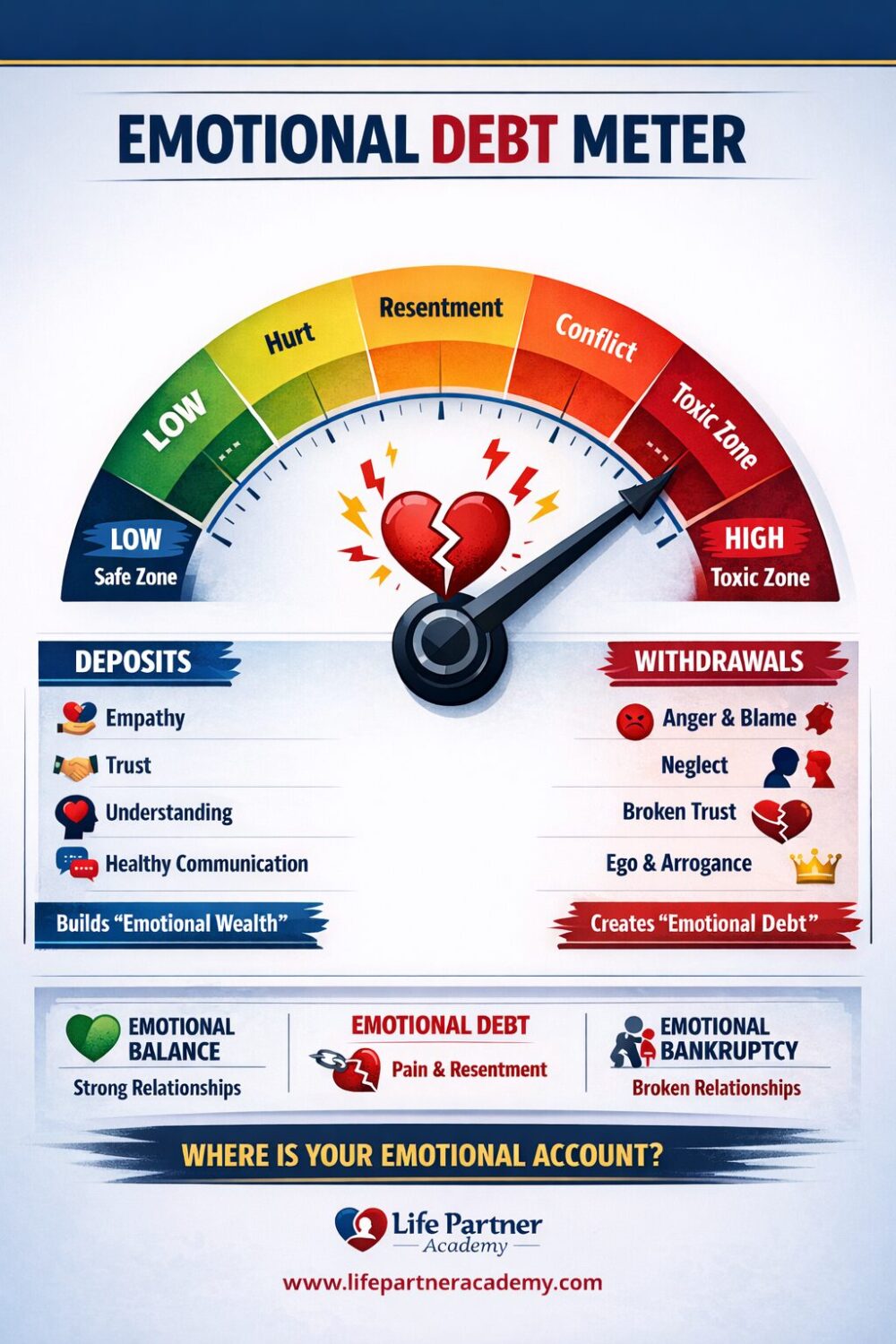
Emotional Debt.
In a world driven by financial ambition, individuals are taught to measure success in numbers. Individuals are taught from an early age to be careful with money. Save well. Invest wisely. Avoid unnecessary loans. Clear your debts. By the time they reach adulthood, many become financially disciplined—tracking expenses, planning investments, and ensuring they remain “debt-free” in the material sense. But there is one form of debt most people never plan for and never realize they are accumulating.
- How much do you earn?
- How much do you save?
- How well do you invest?
- How quickly can you become debt-free?
From an early age, financial discipline is seen as a marker of responsibility and maturity. People build careers, track expenses, plan investments, and take pride in clearing loans and liabilities. Being “debt-free” is considered a major life achievement. But beneath this structured, financially aware life lies a reality that most people never account for.
A silent, invisible, and deeply destructive form of debt.
- A debt that doesn’t appear on any statement.
- A debt no bank tracks.
- A debt no one teaches you to repay.
Emotional Debt.
Understanding Emotional Debt
Emotional debt is the accumulation of pain, hurt, and unresolved emotional damage that a person causes in the lives of others over time.
It includes:
- Words spoken in anger that were never taken back
- Repeated emotional neglect in close relationships
- Broken trust that was never repaired
- Patterns of behavior that slowly erode another person’s well-being
- Lack of empathy in moments that required understanding
Unlike financial debt, emotional debt doesn’t come with reminders or deadlines. There are no notifications, no penalties, no legal consequences.
Instead, it operates quietly.
- It builds in conversations.
- It grows in silence.
- It multiplies in relationships.
And most dangerously, It often goes completely unnoticed by the one creating it.
How Emotional Debt Is Formed
No one wakes up and decides to harm the people they love. Emotional debt is rarely intentional. It is usually the result of something much deeper.
Many individuals carry unresolved internal wounds from:
- Abusive or emotionally unstable childhood environments
- Lack of affection, validation, or emotional safety
- Growing up around conflict, criticism, or neglect
- Being taught to suppress emotions rather than understand them
- Experiencing trauma that was never processed
These experiences shape how a person:
- React instead of respond
- Defend instead of understand
- Control instead of connect
As a result, a person may physically grow into adulthood, but emotionally remain stuck in survival patterns formed years ago. They grow older—but never truly grow up.
Low EQ: The Invisible Liability
At the heart of emotional debt lies one critical factor: Low Emotional Intelligence (EQ). While IQ may help a person succeed professionally, EQ determines how they function in relationships.
A person with low EQ may struggle with:
- Regulating their emotions
- Understanding the feelings of others
- Communicating effectively
- Taking responsibility for their actions
- Responding instead of reacting
This doesn’t make them a bad person. But it does make them emotionally unsafe in close relationships. Because every interaction becomes unpredictable.
- A small issue turns into a major argument.
- A simple misunderstanding escalates into conflict.
- A moment that needed empathy becomes a moment of damage.
Over time, these repeated interactions create emotional strain. And each instance adds another layer, to emotional debt.
The Role of Ego and Arrogance
Low EQ alone is harmful. But when it combines with ego and arrogance, the damage intensifies. Ego prevents self-reflection. Arrogance blocks accountability.
Such individuals may believe:
- “I am not wrong.”
- “This is just how I am.”
- “People are too sensitive.”
- “The problem is always others.”
This mind-set creates a cycle:
- They hurt someone
- They justify their behavior
- They avoid accountability
- They repeat the same actions
With each cycle, the emotional debt doesn’t just grow, It compounds. And just like financial interest, the longer it goes unchecked, the heavier it becomes.
Anger: The Loudest Expression of Emotional Debt
Among all forms of emotional damage, one stands out. Not because it is the root. But because it is the most visible, most frequent, and most destructive expression of emotional debt.
Anger.
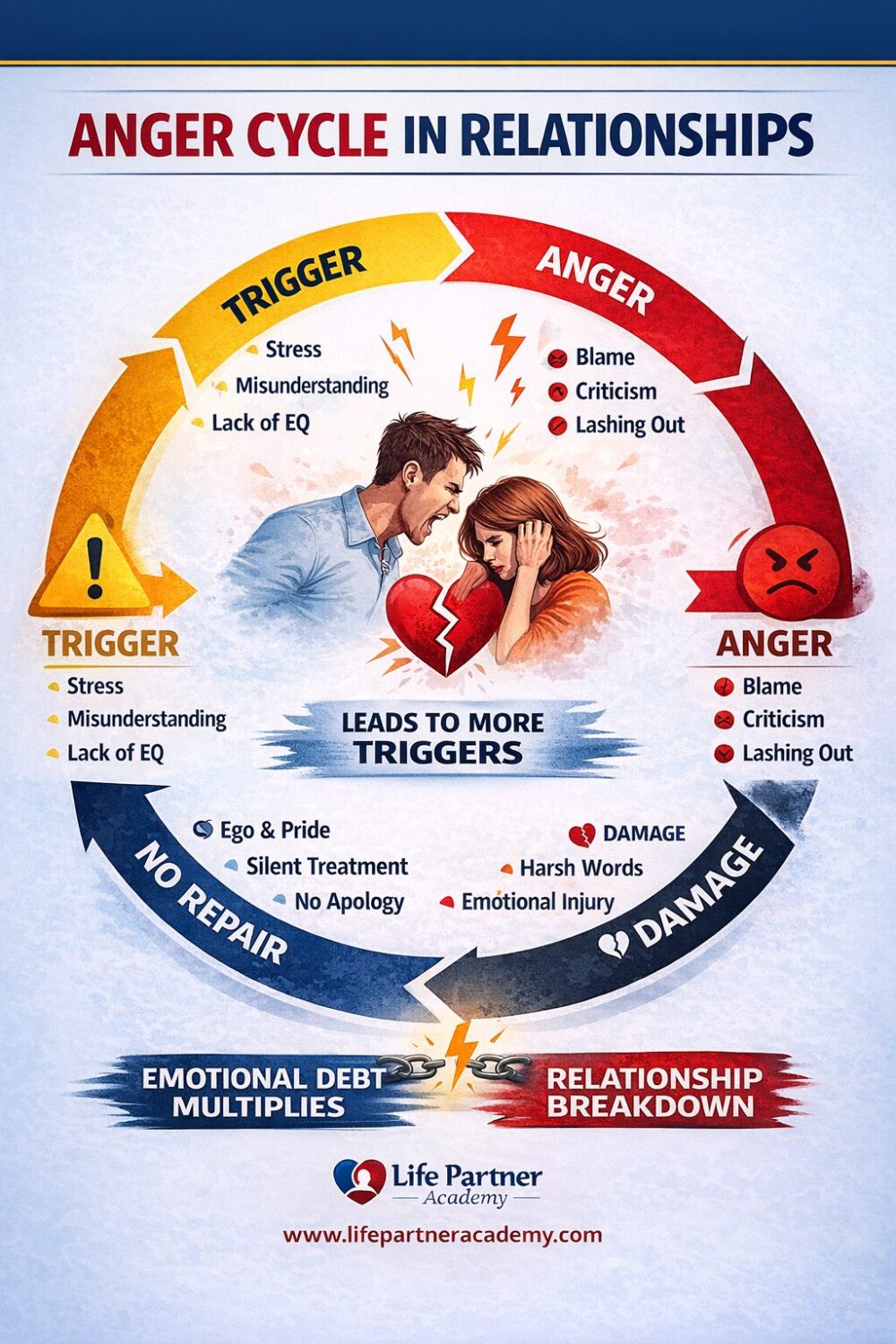
Is Anger the Pinnacle of Relationship Breakdown?
Not exactly. Anger is not the deepest cause. But it is often the final trigger that breaks what is already weakened.
Think of it this way:
- Emotional wounds are the foundation.
- Low EQ is the structure.
- Ego is the barrier.
Anger is the force that brings it all crashing down.
What Lies Beneath Anger
Anger is rarely the real emotion.
Beneath it are:
- Hurt
- Fear
- Rejection
- Insecurity
- Feeling disrespected or unheard
But when a person lacks emotional intelligence, they cannot express these safely.
So everything comes out as:
- Aggression
- Blame
- Criticism
In reality, anger is often a cry that sounds like an attack.
Why Anger Causes Maximum Damage
- It Turns Issues into Personal Attacks
Instead of addressing the problem, anger attacks the person:
- “You always do this.”
- “You never understand.”
- “This is who you are.”
This creates deep emotional wounds.
- It Leaves Permanent Scars
Words spoken in anger don’t disappear.
- They echo.
- They linger.
- They become emotional memories that shape how a person feels about the relationship.
- It Destroys Emotional Safety
Every healthy relationship depends on one invisible factor:
Emotional safety.
When anger is frequent:
- One partner starts walking on eggshells
- Communication becomes guarded
- Authenticity disappears
And once safety is gone, connection begins to fade.
When Anger Meets Ego: The Point of No Return
Anger alone can be repaired. But when combined with ego:
- There is no apology
- No accountability
- No effort to change
Instead, you see:
- Justification
- Blame
- Silence
This creates a destructive cycle: Hurt → Anger → Damage → No Repair → Repeat. And this is where emotional debt grows rapidly.
The Ripple Effect Across Relationships
Emotional debt does not remain confined to one area of life. It spreads across every relationship a person engages in.
- Friendships
Friends begin to feel drained rather than supported.
- Conversations become tense.
- Trust weakens.
- Distance naturally grows.
Eventually, people don’t confront—they withdraw.
- Family Relationships
Families often tolerate more than anyone else.
But even within families:
- Resentment builds
- Communication reduces
- Emotional gaps widen
What appears as “normal family behavior” is often deeply rooted emotional damage left unaddressed.
- Professional Life
At work, low EQ manifests as:
- Poor teamwork
- Conflict with colleagues
- Lack of leadership effectiveness
- Difficulty handling feedback
While skills may keep someone employed, behavior determines how far they grow.
- Marriage and Intimate Relationships
This is where emotional debt becomes most destructive. Because marriage is not built on transactions—it is built on emotional connection. And when that connection is repeatedly damaged, the consequences are severe.
Emotional Debt in Marriage: A Slow Breakdown
In a couple relationship, emotional debt doesn’t explode overnight.
It builds quietly through patterns such as:
- Not listening when your partner needs you
- Dismissing their feelings
- Reacting with anger instead of understanding
- Bringing ego into moments that require humility
- Repeating the same hurtful behaviors
Over time, the relationship begins to change.
- Communication becomes guarded.
- Affection becomes forced.
- Silence becomes frequent.
One partner often feels: “I am constantly adjusting, constantly tolerating, constantly paying… for something I didn’t create.”
This leads to:
- Emotional exhaustion
- Mental fatigue
- Loss of connection
- Deep resentment
And eventually:
- Emotional breakdown
- Or complete relationship breakdown
The Most Dangerous Aspect of Emotional Debt
The most dangerous aspect of emotional debt is not its presence. It is the lack of awareness.
A person may believe:
- “Everything is fine.”
- “This is normal.”
- “All relationships are like this.”
Meanwhile, the other person is silently:
- Breaking
- Withdrawing
- Losing trust
- Preparing to disconnect
By the time the realization comes, The damage is already deep. And sometimes irreversible.
Why Emotional Debt Cannot Be Easily Repaid
Financial debt has structure.
You know:
- How much you owe
- To whom you owe
- How to repay it
Emotional debt is different.
You often don’t know:
- How much damage has been caused
- How deeply someone has been affected
- Whether the relationship can even be repaired
- Some people forgive—but never forget.
- Some people stay—but emotionally disconnect.
- Some people leave—and never return.
This is why emotional debt is so difficult to repay.
Because it involves:
- Human emotions
- Broken trust
- Psychological impact
And these cannot be restored instantly.
Breaking the Cycle: Is Change Possible?
Yes—but only with conscious effort. Reducing emotional debt requires internal transformation, not external adjustments.
- Self-Awareness
The first step is the hardest: Acknowledging that you may be contributing to the problem. Not everything is “others’ fault.”
- Accountability
Taking responsibility without excuses:
- No blame shifting
- No justifications
- No defensiveness
A simple, sincere: “I was wrong.” can begin the process of repair.
- Emotional Growth (Building EQ)
This includes developing:
- Emotional regulation
- Active listening
- Empathy
- Patience
- Healthy communication
These are not inborn traits—they are learnable skills.
- Healing Internal Wounds
Unresolved past experiences must be addressed.
Without healing:
- Old pain continues to shape present behavior
- Triggers remain active
- Patterns repeat
Healing is not optional—it is essential.
- Consistency Over Time
Change is not proven through words. It is proven through patterns.
- Repeated effort
- Sustained improvement
- Predictable emotional safety
Trust rebuilds slowly—but only through consistency.
A Reality Check for Modern Relationships
Today, individuals prepare extensively for:
- Careers
- Financial stability
- Social status
But very few prepare for:
- Emotional responsibility
- Relationship management
- Psychological maturity
As a result, people enter marriages:
- Financially ready
- Socially established
But emotionally unprepared. And when challenges arise, they don’t have the tools to navigate them. This is where emotional debt begins to accumulate rapidly.
A Question worth Asking
Before you focus on:
- Increasing your income
- Expanding your investments
- Achieving financial freedom
Pause and reflect:
- How do people feel after interacting with me?
- Do I bring peace or pressure into relationships?
- Am I emotionally safe for the people close to me?
- Am I healing relationships—or harming them?
Because at the end of life, people will not remember:
- Your salary
- Your assets
- Your financial success
They will remember:
- How you made them feel
- How you treated them
- Whether you added value to their emotional well-being
Final Thought: The Debt That Defines You
- You can recover from financial loss.
- You can rebuild wealth.
- You can restart your career.
But broken trust… damaged relationships… and emotional scars left on others… are not easily repaired. That is why emotional debt is the most serious debt a person can carry. It doesn’t show up in your bank account, It shows up in the quality of your relationships. And ultimately… that is the true measure of your life.
Life Partner Academy Reflection
At Life Partner Academy, we emphasize one core truth: A successful relationship is not built on financial strength alone, but on emotional responsibility. Before committing to a life partner, Before entering marriage, Before expecting love, respect, and understanding.
Ask yourself: “Am I emotionally ready to not create debt in someone else’s life?” Because the strongest relationships are not those without problems—
They are those where both individuals are committed to:
- Growth
- Awareness
- Accountability
- Emotional integrity