
Adjustment in Marriage
The Essential Skill for a Peaceful and Stable Relationship
Marriage is often imagined as the union of two people who are deeply in love and naturally compatible. However, the reality of married life reveals something deeper and more practical. Long-term marital happiness depends less on perfect compatibility and more on the ability to adjust.
Adjustment in marriage means the continuous process of adapting, understanding, and accommodating two different individuals, families, habits, expectations, and personalities so that the relationship remains peaceful, respectful, and stable.
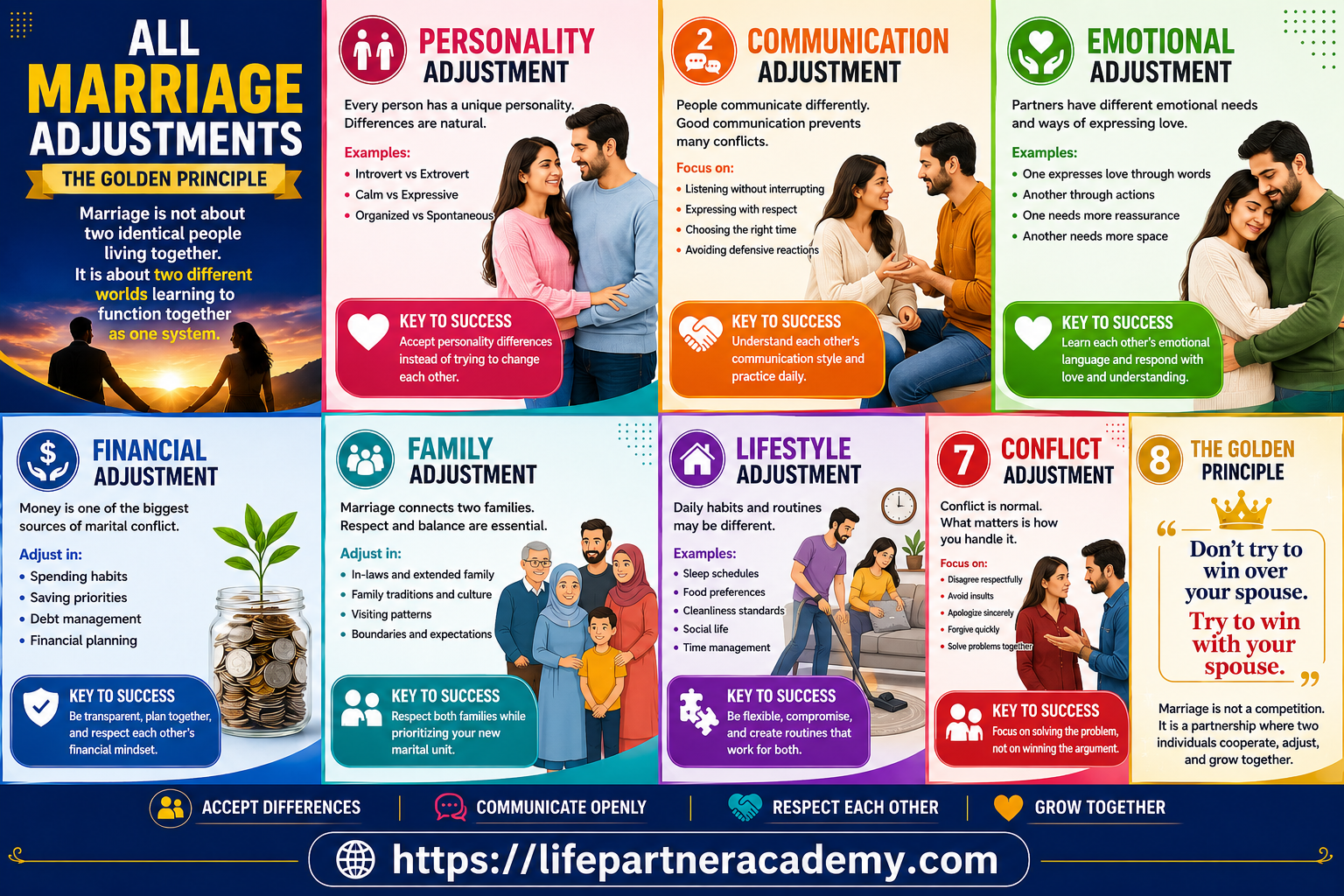
Marriage is not about two identical people living together. It is about two different worlds learning to function together as one system. When couples understand the importance of adjustment before and after marriage, they significantly increase their chances of building a strong, harmonious, and lasting relationship.
This article explores why adjustment in marriage is important and the key areas where couples must learn to adjust for long-term marital success.
Why Adjustment Is Necessary in Marriage
Every individual grows up in a unique environment. From childhood, people develop their own habits, communication styles, emotional patterns, and beliefs about relationships.
When two people marry, they bring with them:
- Different family cultures
- Different communication styles
- Different expectations of marriage
- Different financial habits
- Different emotional needs
Without adjustment, these differences can lead to misunderstandings and conflicts. Successful marriages are not those where partners never disagree. Instead, they are relationships where couples learn to adapt, compromise, and grow together. Adjustment does not mean losing individuality. Rather, it means creating balance and harmony between two individuals.
The Myth of Perfect Compatibility
Many people enter marriage believing they must find someone who is perfectly compatible with them. In reality, no two individuals are perfectly alike. Even couples who appear very compatible eventually discover differences in areas such as:
- Lifestyle habits
- Family relationships
- Spending behavior
- Communication preferences
- Emotional expression
The strength of a marriage lies not in the absence of differences but in the ability to manage those differences respectfully. When couples accept that adjustment is a normal part of marriage, they become more patient and understanding with each other.
Key Areas of Adjustment in Marriage
To build a stable and peaceful marriage, couples must learn to adjust in several important areas.
- Personality Adjustment
Every person has a unique personality. Some individuals are outgoing and expressive, while others are quiet and reflective. Some are highly organized, while others are more relaxed and spontaneous. Personality differences can sometimes lead to misunderstandings. For example, an introverted spouse may need quiet time, while an extroverted partner may prefer social interaction.
Healthy marriages succeed when partners accept personality differences rather than trying to change each other.
- Communication Adjustment
Communication is one of the most important aspects of a successful marriage. However, people communicate in very different ways. Some individuals prefer to discuss issues immediately, while others need time to process their thoughts before talking.
Couples must learn to:
- Listen without interrupting
- Express concerns respectfully
- Avoid defensive reactions
- Choose the right time for important conversations
Effective communication helps couples transform disagreements into opportunities for understanding and growth.
- Emotional Adjustment
People express love and emotions in different ways. One partner may show affection through words, while another may express love through actions or support. Without emotional adjustment, one spouse may feel unappreciated while the other believes they are already showing care. Understanding each other’s emotional needs helps couples maintain closeness and emotional security.
- Financial Adjustment
Money is one of the most common sources of conflict in marriage. Differences in spending habits, saving priorities, and financial goals can create tension. For example, one partner may prefer saving for the future, while the other may enjoy spending on experiences or lifestyle.
Financial adjustment requires:
- Open discussions about money
- Transparency in financial decisions
- Shared financial goals
- Mutual respect for financial habits
When couples plan their finances together, they reduce stress and build long-term stability.
- Family and In-Law Adjustment
Marriage does not only unite two individuals; it also connects two families. Each partner brings family traditions, expectations, and emotional bonds into the relationship. Adjusting to in-law relationships can sometimes be challenging. However, mutual respect and healthy boundaries are essential.
Couples must learn to:
- Respect each other’s families
- Maintain balanced boundaries
- Support each other in family interactions
Successful marriages prioritize the new family unit while maintaining respect for extended family relationships.
- Lifestyle Adjustment
Living together reveals differences in everyday habits that may not have been obvious before marriage. These differences may include:
- Sleeping schedules
- Eating habits
- Cleanliness standards
- Social activities
- Time management
Although these habits may seem small, they can cause frustration if couples are unwilling to compromise. Marriage requires flexibility and the willingness to adapt daily routines for the comfort of both partners.
- Role Adjustment
Modern marriages require clarity about roles and responsibilities. Couples must discuss and agree on matters such as:
- Household responsibilities
- Career priorities
- Parenting roles
- Financial management
When responsibilities are unclear, one partner may feel overburdened while the other may feel criticized. Clear communication and cooperation help couples share responsibilities effectively.
- Conflict Adjustment
Conflict is a natural part of any relationship. What determines the health of a marriage is not the absence of conflict but how couples handle it. Healthy couples learn to:
- Stay respectful during disagreements
- Avoid personal attacks
- Take breaks when emotions escalate
- Apologize when necessary
- Forgive and move forward
When handled properly, conflicts can actually strengthen the relationship by improving understanding.
- Expectation Adjustment
Unrealistic expectations are one of the hidden causes of marital dissatisfaction. Some individuals enter marriage expecting their partner to:
- Always understand them without explanation
- Always agree with them
- Always prioritize them over everything else
These expectations can create disappointment. Healthy marriages replace unrealistic expectations with clear communication and acceptance.
- Growth Adjustment
People evolve over time. Careers change, priorities shift, and personal beliefs develop. A successful marriage requires partners who are willing to grow together rather than resist change. Couples must learn to support each other’s ambitions, adapt to life transitions, and maintain their commitment through different stages of life.
The Role of Character in Marital Adjustment
Adjustment becomes easier when both partners possess strong personal character. Qualities such as patience, humility, empathy, and self-control play a crucial role in maintaining harmony. When individuals focus on improving their own character, they naturally become better partners.
In many cases, marital conflicts arise not because of major incompatibilities but because of ego, pride, or lack of emotional maturity. Strong character reduces these problems and promotes mutual respect.
Communication: The Bridge of Adjustment
Even the most compatible couples will face disagreements. The difference between stable marriages and struggling marriages often lies in communication. Good communication helps couples:
- Understand each other’s feelings
- Clarify expectations
- Resolve misunderstandings
- Strengthen emotional intimacy
When couples learn to listen with empathy and speak with respect, adjustment becomes easier and more natural.
The Golden Principle of Marital Adjustment
One simple principle can transform any marriage: Do not try to win over your spouse. Try to win with your spouse.
Marriage is not a competition. It is a partnership where both individuals work together toward a shared life. When couples adopt a mindset of teamwork, conflicts become easier to resolve and adjustment becomes a shared effort rather than a burden.
Final Thoughts
Adjustment is not a weakness in marriage; it is a strength. It reflects maturity, empathy, and commitment to the relationship. Every successful marriage involves two individuals who continuously learn, adapt, and grow together. Differences will always exist, but when couples approach those differences with patience and understanding, they can build a relationship filled with peace, respect, and stability.
Marriage is not about finding the perfect partner. It is about becoming the right partner and learning the art of adjustment. When couples master this skill, they create a marriage that can withstand challenges and flourish over time.