
Is Postpartum the First Emotional Postmortem of Marriage?
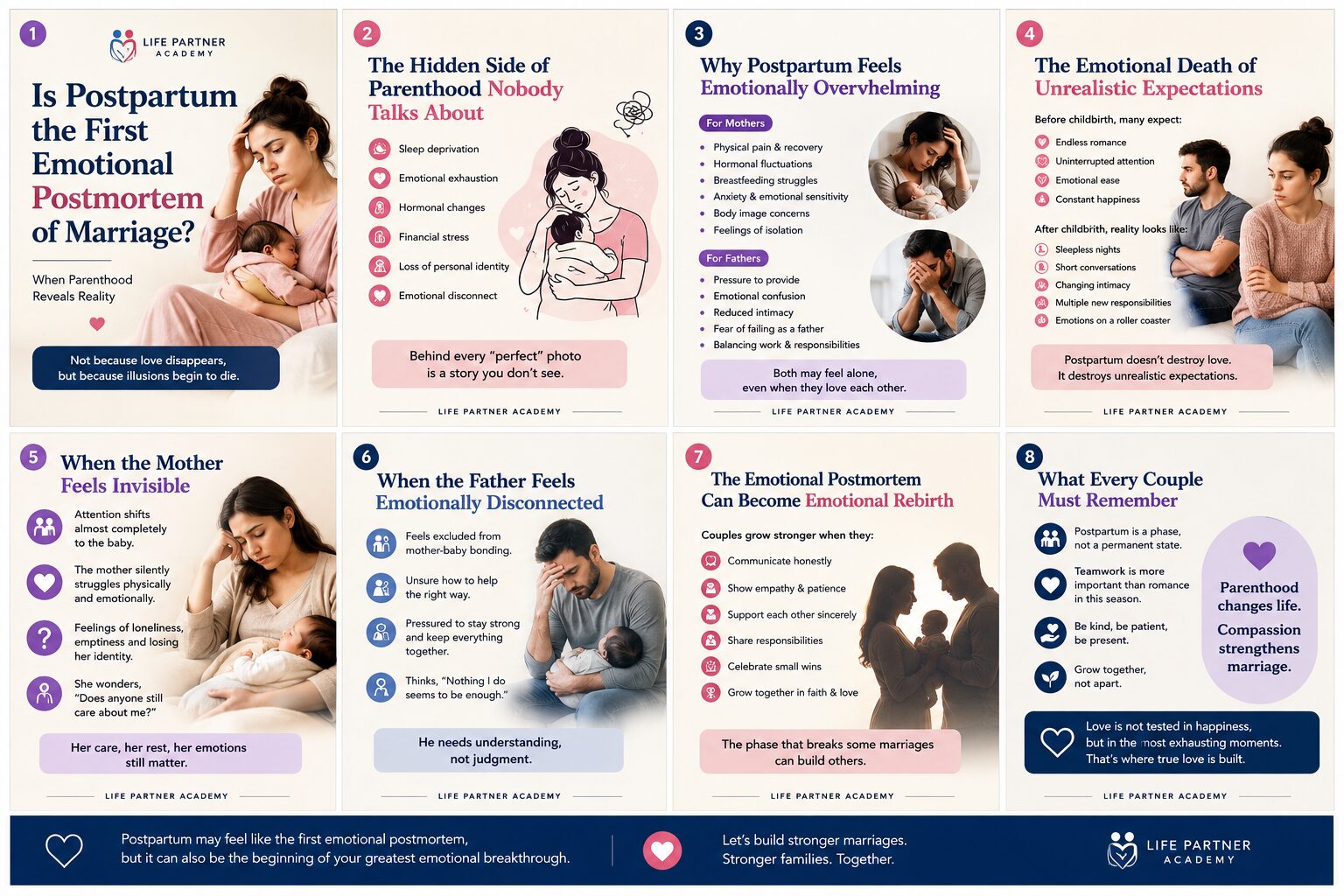
When Parenthood Reveals the Emotional Reality behind Relationships
A wedding is celebrated with lights, smiles, promises and dreams. Pregnancy is often welcomed with excitement, prayers, baby showers and endless congratulations. But postpartum — the phase after childbirth — introduces something society rarely discusses honestly: emotional reality.
For many couples, postpartum becomes the first true emotional examination of their marriage. It exposes emotional strengths, hidden weaknesses, unrealistic expectations, communication gaps and the actual preparedness of two individuals suddenly responsible for a new human life.
That is why many people quietly experience postpartum as the first emotional postmortem of marriage.
Not because love disappears. But because illusions begin to die.
The Hidden Side of Parenthood Nobody Talks About
Social media glorifies:
- wedding photography,
- maternity shoots,
- matching baby outfits,
- smiling family portraits,
- “perfect parenting moments.”
But very little attention is given to:
- sleep deprivation,
- emotional exhaustion,
- hormonal instability,
- postpartum depression,
- loneliness after childbirth,
- emotional disconnect between spouses,
- financial stress,
- physical recovery,
- or the pressure of constant caregiving.
The transition from couplehood to parenthood is one of the biggest emotional shifts in human life. Yet many enter this phase with almost no structured preparation. A society that spends months planning weddings often spends very little time preparing couples for what comes after childbirth.
Why Postpartum Feels Emotionally Overwhelming
Postpartum is not merely a medical recovery phase. It is a complete emotional, psychological, physical and relational transformation.
A mother may experience:
- physical pain and healing,
- hormonal fluctuations,
- sleep deprivation,
- breastfeeding struggles,
- anxiety,
- emotional sensitivity,
- body image concerns,
- feelings of isolation,
- fear of inadequacy.
At the same time, fathers may silently struggle with:
- financial pressure,
- emotional confusion,
- reduced intimacy,
- fear of failing as a provider,
- uncertainty about supporting their spouse,
- emotional neglect,
- exhaustion from balancing work and family responsibilities.
Both individuals may genuinely love each other while simultaneously feeling misunderstood.
This emotional collision creates tension that many couples were never trained to navigate.
The Emotional Death of Unrealistic Expectations
Before marriage, many people unconsciously carry fantasies about relationships:
- endless romance,
- uninterrupted attention,
- emotional ease,
- constant companionship,
- predictable happiness.
Postpartum disrupts these fantasies almost immediately.
Suddenly:
- conversations become shorter,
- rest becomes precious,
- intimacy changes,
- emotions become unstable,
- patience gets tested,
- responsibilities multiply.
The husband may feel emotionally neglected. The wife may feel physically and emotionally abandoned. Both may begin questioning:
- “Why has everything changed?”
- “Why don’t I feel emotionally connected?”
- “Why are we fighting more?”
- “Why does marriage suddenly feel difficult?”
In reality, postpartum often does not destroy love. It destroys unrealistic expectations about love.
When the Mother Feels Invisible
One of the most painful postpartum experiences is emotional invisibility. During pregnancy, the mother is often the center of attention:
- people ask about her health,
- celebrate her journey,
- show emotional care,
- praise her strength.
After childbirth, attention quickly shifts toward the baby.
Visitors arrive asking:
- “How is the baby?”
- “Did the baby sleep?”
- “Who does the baby resemble?”
Meanwhile, the mother may be silently struggling emotionally and physically.
Many women quietly experience:
- emotional emptiness,
- unexplained crying,
- loneliness,
- mental exhaustion,
- feelings of losing personal identity.
Some mothers begin wondering:
- “Does anyone still care about me?”
- “Why do I feel emotionally drained?”
- “Why am I unhappy despite having a beautiful child?”
These emotions are more common than society openly acknowledges.
When the Father Feels Emotionally Disconnected
Fathers are often expected to remain emotionally strong and continue functioning normally after childbirth. But many men experience silent emotional struggles too.
Some fathers feel:
- excluded from the mother-baby emotional bond,
- confused about how to help,
- emotionally ignored,
- pressured to increase financial stability,
- uncertain about their new role.
A husband may think:
- “No matter what I do, it seems insufficient.”
- At the same time, the wife may think:
- “He does not understand my pain.”
Both may be emotionally overwhelmed while misunderstanding each other completely.
This is why postpartum can become emotionally dangerous when communication disappears.
Marriage Is Truly Tested After Childbirth
It is easy to appear emotionally compatible during:
- vacations,
- celebrations,
- romantic conversations,
- social outings,
- stress-free periods.
But marriage is truly tested during:
- exhaustion,
- illness,
- financial strain,
- emotional breakdowns,
- sleepless nights,
- parenting stress,
- and overwhelming responsibilities.
Postpartum reveals:
- emotional maturity,
- patience,
- compassion,
- adaptability,
- conflict management skills,
- teamwork abilities,
- spiritual grounding.
It exposes whether marriage was built merely upon attraction and excitement or upon deeper qualities such as mercy, sacrifice and emotional resilience.
The Lack of Premarital Emotional Education
Modern education systems prepare people for:
- careers,
- technology,
- academic exams,
- professional competition.
But very few people receive structured education about:
- emotional regulation,
- marital communication,
- parenting realities,
- postpartum mental health,
- stress management,
- conflict resolution,
- family dynamics,
- caregiving responsibilities.
As a result, many couples enter marriage emotionally unprepared for one of life’s most demanding phases. Premarital education should include practical discussions about:
- postpartum recovery,
- emotional shifts after childbirth,
- fatherhood responsibilities,
- maternal mental health,
- realistic expectations,
- teamwork during parenting,
- emotional support systems.
Without preparation, many couples mistake temporary emotional strain for permanent relationship failure.
Social Media Intensifies Postpartum Pressure
Another major problem today is comparison culture. Social media creates unrealistic standards of:
- motherhood,
- parenting,
- marriage,
- beauty,
- emotional happiness.
Couples constantly see curated images of:
- smiling babies,
- organized homes,
- glamorous mothers,
- romantic parenting moments.
But behind many photographs are hidden struggles:
- sleep deprivation,
- anxiety,
- arguments,
- exhaustion,
- emotional burnout.
Constant comparison makes many parents feel inadequate.
- A mother may feel:
- “Why am I struggling when everyone else looks happy?”
- A father may feel:
- “Why does everyone else seem emotionally stable?”
In reality, many people are silently struggling while publicly pretending everything is perfect.
Postpartum Depression Is Real
One of the most serious postpartum realities is postpartum depression.
This condition can include:
- persistent sadness,
- hopelessness,
- emotional numbness,
- anxiety,
- irritability,
- difficulty bonding with the baby,
- extreme fatigue,
- feelings of worthlessness.
Postpartum depression is not weakness, ingratitude or lack of faith. It is a serious emotional and psychological condition that deserves compassion, support and professional care when necessary. Families should avoid:
- mocking emotional struggles,
- dismissing feelings,
- comparing mothers,
- or shaming vulnerability.
Supportive environments are essential for emotional recovery.
The Importance of Mercy and Teamwork
Postpartum teaches an important truth about marriage:
Marriage is not sustained merely by romance.
It survives through:
- mercy,
- patience,
- emotional understanding,
- sacrifice,
- communication,
- teamwork,
- mutual respect.
Small acts become deeply meaningful:
- helping with the baby,
- allowing rest,
- listening without criticism,
- offering reassurance,
- reducing unnecessary pressure,
- expressing appreciation.
Sometimes emotional healing begins not through grand gestures but through simple compassion.
The Emotional Postmortem Can Become Emotional Rebirth
The beautiful reality is that postpartum does not only expose weakness. It can also build strength.
Some couples become emotionally closer after childbirth because they:
- learn sacrifice,
- communicate honestly,
- mature emotionally,
- become more compassionate,
- develop deeper respect for one another.
The sleepless nights, emotional struggles and overwhelming responsibilities sometimes become the very experiences that strengthen marriage. A relationship that survives postpartum with empathy and teamwork often develops greater emotional depth than before.
Rebuilding Realistic Expectations
Healthy marriages after childbirth require realistic thinking. Couples must understand:
- exhaustion is normal,
- emotional fluctuations are normal,
- temporary distance may happen,
- recovery takes time,
- adjustment is necessary.
Instead of asking:
- “Why is marriage becoming difficult?”
- The better question may be:
- “How can we grow together during difficulty?”
Parenthood changes life permanently. But it can also transform individuals into more patient, responsible and emotionally mature human beings.
Conclusion
Postpartum may feel like the first emotional postmortem because it reveals the true emotional condition of marriage, expectations, communication and personal maturity. The arrival of a child does not only create parents. It exposes emotional realities that were previously hidden beneath romance, routine and comfort. Yet postpartum is not merely the death of illusion.
For many couples, it becomes the beginning of deeper compassion, stronger partnership and more meaningful love. Because sometimes, the first cries of a newborn also awaken the emotional truths that marriage had never faced before.