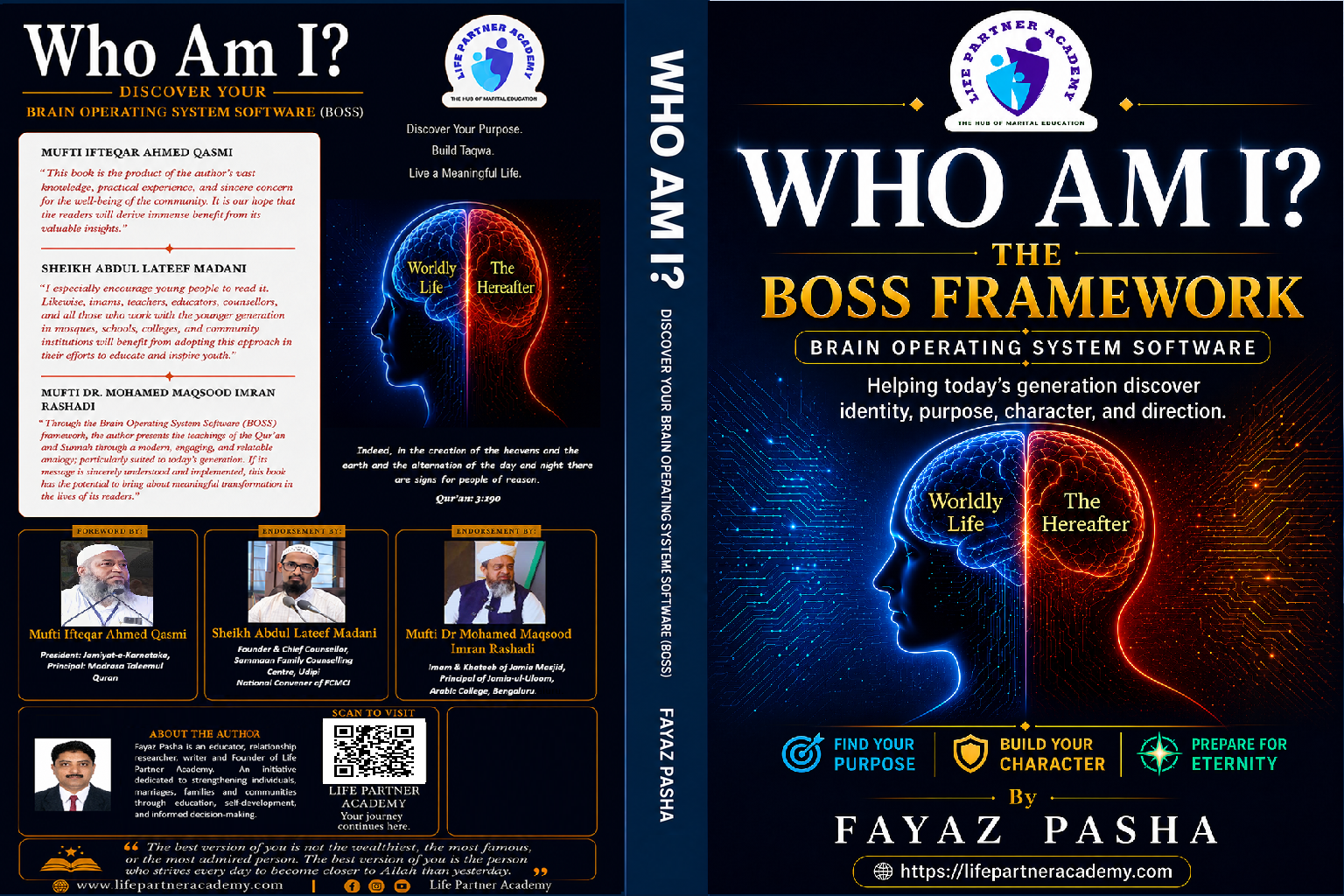
PROGRAMMING THE PROGRAMMER
Human Brain: Approximate: 200 TB
Latest high-end laptop SSD: ~16 TB
Your brain ≈ 25 times more storage than a top-tier computer drive.
Even though the brain can store the equivalent of 200 TB, humans generally store, Barely a few gigabytes of truly meaningful, retained, usable knowledge.
Some scientists estimate 1–5 GB of stable lifetime memories, after removing all forgotten, overwritten, and unused information.
Why so little?
Because capacity is not the problem — input quality is.
Why the Present Generation Stores Even Less (Much Less)
They read less, Reading encodes deep memories — multi-layered, long-lasting.
They browse more, Browsing is shallow → nothing is stored in long-term memory.
Scrolling = stimulation, not learning.
They don’t engage in deep thinking, Deep thinking “compresses and organizes” knowledge into long-term storage.
They multitask constantly, This prevents encoding; information never enters long-term memory.
They rely on Google, AI, and the phone, Why store anything when the device remembers everything?
Attention span has collapsed, From 12 seconds → 2–3 seconds in Gen Z
Without attention, memory cannot form. Result? They consume terabytes of content…
but store only megabytes in the mind.
The Brain Is a 200 TB Drive Running at 1% of Its Potential
A 200 TB hard disk, but only 2 GB saved.
A massive library, but only 3 books inside.
A supercomputer used like a calculator.
Installation of Software — Computers Upgrade, Humans Don’t
After hardware (capacity), the next step in any computer is software installation.
Even the world’s most powerful computer is useless without:
The right operating system
Updated software
Useful applications
Security patches
Virus protection
Computers demand updated software to function properly.
They can’t run modern apps with outdated systems.
But humans?
We operate exactly the opposite way.
Human Life: Running on Old Software
While computers keep updating…
we keep running on outdated mental software installed in childhood.
This “software” includes:
Mind-sets we inherited
Fears our parents carried
Cultural beliefs
Social expectations
Limiting thoughts
Trauma and insecurities
Judgments and comparisons
Wrong ways of thinking taught unintentionally
Old habits that no longer fit our life
Outdated emotional responses (anger, ego, fear, inferiority)
A computer warns you when software is outdated.
The mind never warns — it simply malfunctions.
We suffer from:
Anxiety
Low confidence
Fear of opinions
Overthinking
Broken relationships
Negative thinking
Not because life is difficult…
but because our mental software is outdated, incompatible with today’s realities.
The Tragedy: We Upgrade Devices, Not Ourselves
Every year:
New phone
New apps
New software
New laptop
New operating system
New features
But our mind OS is still the same:
Same anger pattern
Same jealousy script
Same self-doubt file
Same unhelpful habits
Same emotional reactions
Same worldview we downloaded at age 7
We keep updating gadgets,
but we never update our character, thinking, or identity.
The Real Problem
We expect to live a successful, peaceful, purposeful life…
with mental software from 20 years ago
running on today’s world of pressure, speed, noise, and competition.
It’s like trying to run Windows 11 on a computer with Windows 95 installed.
It simply crashes.
What Human Software Updates Should Look Like
These are the real updates the mind needs:
New beliefs
Better habits
Emotional intelligence
Reading and lifelong learning
Self-discipline
Reflection and introspection
Letting go of old fears
Installing patience, empathy, and gratitude
Uninstalling comparison, ego, and negativity
Updating skills and knowledge constantly
Computers require software updates for performance.
Humans require mind updates for happiness.
“We demand the latest software for our computers, but we live our lives with the oldest software installed by parents and society.”
or
“Our devices update every week. Our mind hasn’t updated in decades.”
Computer Input Devices vs Human Input Devices
Computers usually have a small set of input devices, mainly:
- Keyboard
- Mouse / Touchpad
- Touchscreen
- Microphone
- Camera
- Scanner (optional)
They are limited, mechanical, and fixed.
Humans, however, have SIX major input devices
These are the six senses, and they act as continuous data-input channels feeding the brain:
- Eyes (Vision Input)
Equivalent to a high-resolution camera
576-megapixel equivalent
Huge bandwidth, constantly streaming data
Main gateway for learning and memory
- Ears (Hearing Input)
Equivalent to powerful multi-directional microphones
Process speech, tone, emotion, music
Directly linked to emotional memory and language centers
- Nose (Smell Input)
Equivalent to a chemical sensor
Detects thousands of scents
Direct shortcut to emotional brain (amygdala)
Often triggers old memories instantly
- Tongue (Taste Input)
Equivalent to a biochemical detector
Bitter, sweet, salty, sour, umami
Strong connection to survival instincts
- Skin (Touch Input)
Equivalent to touch sensors + temperature sensors + pain sensors
Detects pressure, vibration, heat, cold, injury
Largest input organ of the body
- Mind / Intuition (Internal Input)
This is the unique sixth input device that computers do NOT have:
- Thoughts
- Imagination
- Emotions
- Self-talk
- Internal reasoning
- Memory recall
- Dreams
This is the biggest input channel of all, because it is always active—even while sleeping.
Computers have few, limited, optional input devices.
Humans have six, automatic, uncontrollable input devices.
Computers receive data only when we allow them to.
Humans receive billions of bits of data every second—most of it unfiltered.
This is why the human mind gets:
Overloaded
Distracted
Confused
Full of mental “garbage files”
Controlled by environment
Unless a person installs filters, the mind becomes overwhelmed.
Human Mind Protection & Filters — The Missing Antivirus
In computers, protection is mandatory, not optional.
Without antivirus, firewalls, updates, and security patches:
A computer becomes slow
Files get corrupted
Hackers can take control
Unwanted data keeps entering
Eventually the system collapses
Humans are exactly the same—but they don’t realize it.
- Computers Need Protection. Humans Need Protection AND Filters
Computers require:
Antivirus
Firewall
Malware protection
Spam filters
Security patches
OS updates
Humans require:
Mental antivirus → to reject negative thoughts and beliefs
Emotional firewall → to block toxic people and environments
Behavioral filters → to choose what to accept and what to ignore
Knowledge updates → to correct outdated, wrong beliefs
Spiritual protection → to strengthen faith, values, purpose
Self-awareness → to scan and detect internal “viruses”
But most humans live completely unprotected, collecting:
- Negative input
- False information
- Wrong beliefs
- Toxic influences
- Social-media addictions
- Parental and societal conditioning
It is like using a computer on the internet with no firewall.
- Latest Software Protect Computers — but Humans Run on Outdated Mental Software
Computers get updates, patches, and upgrades every few months.
But humans?
Most people run on mental software installed in childhood
Old beliefs from parents, society, culture
Programs created by fear, trauma, and comparison
Outdated ideas about life, work, marriage, success, identity
This mental “software” was installed when they were:
5 years old
10 years old
Teenagers
Influenced by others who were themselves confused
And they never update it.
If a computer ran 30–40 years on the same software—it would crash.
Humans are crashing mentally every day.
- No Filters → GIGO (Garbage In, Garbage Out)
In computer science, GIGO means:
Garbage In = Garbage Out
If the input is wrong, the output will definitely be wrong.
This applies even more to the human mind.
When you fill the mind with:
- Useless scrolling
- Noisy media
- Toxic conversations
- Comparison
- Fear-based content
- Rumours, assumptions, gossip
- The output becomes:
- Anxiety
- Anger
- Low confidence
- Confused decisions
- Weak relationships
- Wrong actions
- Emotional instability
The problem is not life…
The problem is the input that enters the mind without filters.
- Living Life at the Subconscious Level = Auto-Pilot Mode
When the mind is unprotected and unfiltered, something worse happens:
The individual starts living life on AUTO-PILOT, controlled by:
- Childhood programming
- Environment
- Advertisements
- Society
- Social media
- Fear
- Unconscious beliefs
- This is like a computer that has:
- No user
- No firewall
- No antivirus
- No updates
- And is being used by anyone who gets access
That’s how people lose control of their own lives.
They think they are choosing.
But their subconscious programming is choosing for them.
- Humans Live at High Risk Without Realizing It
Computers show warnings:
- “Your system is at risk.”
- “Update required.”
- “Firewall disabled.”
- “Virus threat detected.”
- Humans don’t have warning windows.
- So they never realize the danger even when they are affected:
- Broken relationships
- Wrong decisions
- Emotional damage
- Addictions
- Lost purpose
- Depression
- Anxiety
- Low self-worth
They never see it as a mind virus.
PROGRAMMING — The Core Problem of Our Generation
When computers first entered our lives, we began with the most basic programming:
DOS → simple command-line
BASIC / BASICA → logic building
FORTRAN → scientific and structured programming
COBOL, C, C++, and many more
Over the years, programming evolved into:
- Web development
- AI and Machine Learning
- Mobile apps
- Cloud systems
- Robotics
- Autonomous machines
- Today humans can:
- Program robots
- Program cars
- Program satellites
- Program entire smart cities
- Program Artificial Intelligence systems with billions of parameters
We have mastered everything…
Except the most important software of all — our own mind.
Humans learned everything about programming computers…
but forgot to PROGRAM their own mind.**
This is the root cause of most suffering today.
Computers follow the programmer.
Humans follow the world.
Computers obey your commands.
Humans obey their conditioning.
Robots take instructions from their makers.
Humans take instructions from the environment, society, and emotions.
Why?
Because…
The human mind is the only SUPERCOMPUTER in the world that is left unprogrammed.
We program phones, tablets, networks, data centres, robots…
But the mind of the person using them?
Unprogrammed.
Unprotected.
Unfiltered.
Easily influenced.
If YOU don’t program your mind, the WORLD will.
The mind does not stay empty.
It gets programmed automatically by:
- Parents
- School
- Society
- Media
- Friends
- Culture
- Trends
- Advertisements
- Influencers
- Trauma
- Fear
- Environment
Just like a computer with no admin and no password, anyone can enter and install anything.
This is why:
- People don’t know what they really want
- They follow trends blindly
- They live someone else’s life
- Their thoughts are not theirs
- Their opinions are borrowed
- Their dreams are copied
- Their fears are inherited
- Their decisions are reactions, not choices
- They are not driving their life.
Their programming is driving it.
We became experts in programming machines…
but remained amateurs in programming ourselves.**
We program robots with precision, logic, and clarity:
If X happens, do Y
If system fails, reboot
If danger appears, stop
But humans?
No clear programming.
No algorithms.
No rules.
No clarity.
No self-commands.
This creates:
- Confusion
- Emotional instability
- Poor decisions
- Weak relationships
- Zero discipline
- Lack of focus
- Lost purpose
- Because the mind is running on:
- Childhood code
- Old beliefs
- Wrong instructions
- Emotional viruses
- Mental junk files
- Social media algorithms
- Society’s expectations
- Trauma-based scripts
While computers have moved from DOS → AI,
most minds are still stuck at Version 1.0 installed by society.
We program machines to obey us.
But we never programmed ourselves to obey OUR goals.**
Computers follow:
- Logic
- Structure
- Process
- Discipline
- But humans follow:
- Mood
- Impulse
- Emotion
- Social pressure
- Imagine if a robot worked the way most humans do:
- Sometimes motivated, sometimes not
- Sometimes productive, sometimes distracted
- Sometimes disciplined, sometimes lazy
- We would call it “corrupted software.”
But that’s exactly how most minds operate —
because the programming was never done consciously.
True Freedom Begins When You Become the Programmer of Your Own Mind
To take back control of your life:
You must become the programmer,
not the programmed person.
You must choose:
- What enters your mind
- What stays
- What gets deleted
- What gets updated
- What gets protected
- What gets ignored
- What gets executed
- This is how a person becomes:
- Focused
- Disciplined
- Emotionally strong
- Purpose-driven
- Resilient
- Wise
- Successful
- Spiritually grounded
Because their mind obeys THEM,
not the noise of the world.
“How to Program the Human Mind — Step-by-Step (Like Coding)”
Check it out:
Amazon.com
Notion Press
Download a PDF BOOK
WHO AM I