
STAGES OF LIFE
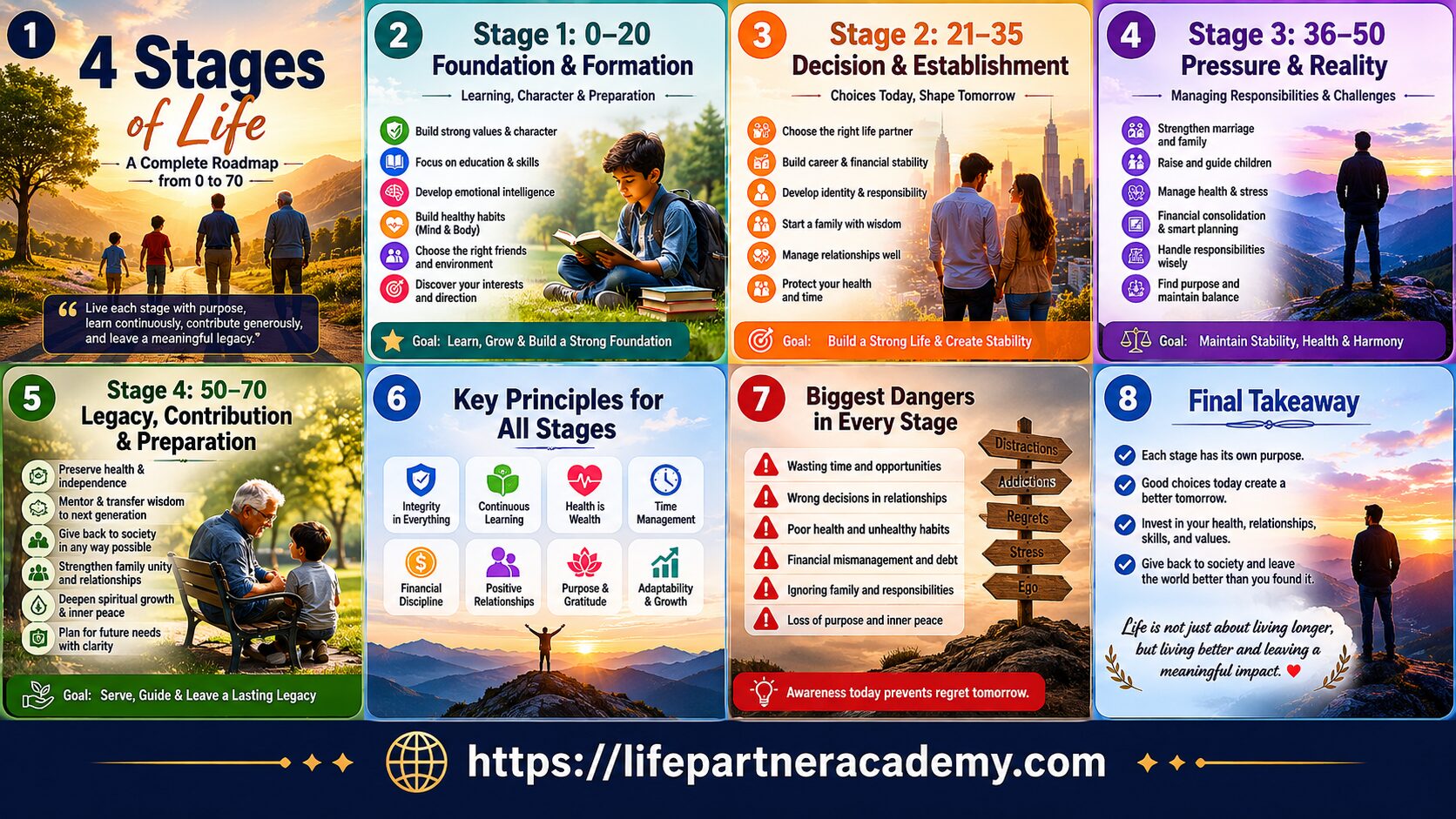
Life is a journey, but not every stage of that journey demands the same priorities. Every phase of life brings unique opportunities, responsibilities, challenges, and decisions that shape our future. Understanding what to focus on at the right time can help us make wiser choices, avoid unnecessary regrets, and live with greater purpose.
In many parts of the world today, people are facing unprecedented levels of stress. Unhealthy lifestyles, chronic diseases, pollution, financial pressures, broken family structures, addictions, digital distractions, and growing mental health challenges are reducing not only the quality of life but, in many cases, life expectancy itself. While medical science has advanced remarkably, many people are becoming physically exhausted, emotionally drained, and spiritually disconnected much earlier than previous generations.
This changing reality calls for a more intentional approach to life. Rather than drifting from one phase to another, we need a roadmap that helps us recognize the priorities of each stage and prepare for what lies ahead. The habits we develop in childhood influence our decisions as young adults. The decisions we make in early adulthood determine the stability of our families and careers. The choices we make in midlife affect our health, relationships, and peace of mind. Finally, the later years of life provide an opportunity to leave behind a legacy of wisdom, service, and positive impact.
The four stages presented in this framework are not merely based on age; they represent changing responsibilities and evolving purposes. When we understand the purpose of each stage and invest in what truly matters, we are better equipped to build meaningful relationships, contribute to society, and leave the world better than we found it. A purposeful life is not measured only by how long we live, but by how wisely we live and how positively we influence others.
Age 0–20
Foundation and Formation Stage
Core Focus:
Learning who you are and preparing for adult life.
This is the stage where:
- personality forms,
- habits develop,
- worldview is shaped,
- and future direction begins.
Most Critical Areas
Character and Values
- Discipline
- Honesty
- Respect
- Accountability
- Spiritual and moral grounding
Education and Skill Development
- Communication
- Critical thinking
- Technology
- Problem-solving
- Practical life skills
Emotional Development
- Handling failure
- Delayed gratification
- Emotional control
- Self-confidence
Health Habits
- Nutrition
- Physical activity
- Sleep discipline
- Avoiding addictions
Choosing Environment Carefully
- Friends
- Teachers
- Mentors
- Online influences
Biggest Danger
Wasting the most energetic learning years on:
- entertainment addiction,
- social media,
- gaming,
- unhealthy relationships,
- or directionless living.
Age 21–35
Decision and Establishment Stage
Core Focus:
The most important life decisions are usually made here.
This stage often determines:
- career trajectory,
- spouse selection,
- financial future,
- and family structure.
Most Critical Areas
Spouse Selection and Marriage
Possibly the most life-altering decision in this stage.
Choosing based only on:
- beauty,
- status,
- money,
- degrees,
- or social pressure
can affect decades of life.
Career and Financial Stability
- Building expertise
- Income generation
- Financial discipline
- Avoiding destructive debt
Identity and Responsibility
- Becoming dependable
- Taking ownership of life
- Transitioning from dependence to leadership
Family Building
- Parenting preparation
- Communication skills
- Conflict resolution
- Emotional maturity
Health Protection
This is where many begin silently damaging their future through:
- stress,
- lack of sleep,
- processed foods,
- sedentary lifestyles,
- and overwork.
Biggest Danger
Making permanent decisions based on temporary emotions.
Age 36–50
Pressure, Responsibility, and Reality Stage
Core Focus:
Maintaining what was built and surviving accumulated pressures.
This is often the heaviest stage of life.
People may simultaneously handle:
- teenage children,
- aging parents,
- career pressure,
- health decline,
- financial burdens,
- and marital strain.
Most Critical Areas
Marriage Preservation
Many marriages either stabilize deeply or begin breaking here.
Focus on:
- communication,
- patience,
- mutual respect,
- emotional support,
- and shared goals.
Parenting Teenagers and Young Adults
Children now require:
- guidance,
- mentorship,
- emotional support,
- and monitoring of influences.
Health Crisis Prevention
Lifestyle diseases often emerge here:
- diabetes,
- hypertension,
- obesity,
- cardiac problems,
- anxiety,
- burnout.
Financial Consolidation
- Savings
- Retirement planning
- Asset protection
- Avoiding unnecessary risk
Purpose and Meaning
Many experience:
- midlife crisis,
- emotional emptiness,
- regret,
- or questioning of life direction.
Biggest Danger
Living mechanically without reflection while slowly collapsing physically, emotionally, or spiritually.
Age 50–70
Legacy, Contribution, and Preparation Stage
Core Focus:
Preserving health, transferring wisdom, giving back to society, and preparing for the final phase of life.
At this stage, people increasingly realize:
- wealth remains behind,
- status fades,
- beauty declines,
- positions are replaced,
- but beneficial impact can outlive a person.
Most Critical Areas
- Health Maintenance
Focus shifts from performance to:
- preservation,
- mobility,
- independence,
- and quality of life.
The goal is not merely to live longer,
but to remain useful, active, and mentally present.
- Mentorship and Wisdom Transfer
This is one of the most valuable responsibilities of this stage.
Society needs:
- experienced mentors,
- wise elders,
- teachers,
- advisors,
- and peacemakers.
Younger generations benefit enormously from:
- practical experience,
- life lessons,
- and guidance that books alone cannot provide.
- Giving Back to Society
This stage should include contribution in whatever manner possible.
Not everyone can contribute through wealth,
but everyone can contribute somehow:
- teaching,
- mentoring,
- volunteering,
- community service,
- counseling,
- supporting families,
- helping the poor,
- sharing knowledge,
- solving problems,
- or simply guiding the next generation.
Even small acts of sincere service can leave a lasting impact.
- Family Unity and Stability
Elders often become:
- either the glue of the family,
- or the source of division.
This stage requires:
- emotional maturity,
- fairness,
- conflict resolution,
- and preserving relationships.
- Spiritual and Inner Development
People naturally begin reflecting more deeply on:
- purpose,
- mortality,
- accountability,
- gratitude,
- forgiveness,
- and inner peace.
This often becomes the stage of deeper self-understanding.
- Preparing for Dependence and the Future
Planning becomes important for:
- healthcare,
- finances,
- caregiving,
- wills and responsibilities,
- and emotional support systems.
Wise preparation reduces burden on others later.
Biggest Danger
- Isolation
- Regret
- Bitterness
- Becoming self-centered
- Losing purpose after retirement
- Believing “my role in society is over”
One Important Truth
A society that ignores its elders loses wisdom.
And elders who stop contributing too early often lose meaning.
The healthiest societies are those where:
- the young have energy,
- the middle-aged carry responsibility,
- and the elderly provide wisdom, balance, and guidance.
Life Framework
| Stage | Age | Main Focus |
| Foundation & Formation | 0–20 | Learning and character |
| Decision & Establishment | 21–35 | Marriage, career, identity |
| Pressure & Reality | 36–50 | Stability, health, family |
| Legacy, Contribution & Preparation | 50–70 | Wisdom, service, preparation |
Final Reflection
The true value of life is not measured only by:
- how long one lived,
- how much one earned,
- or what position one held.
But also by:
- whom one helped,
- what problems one solved,
- what wisdom one shared,
- and what positive impact remained after them.