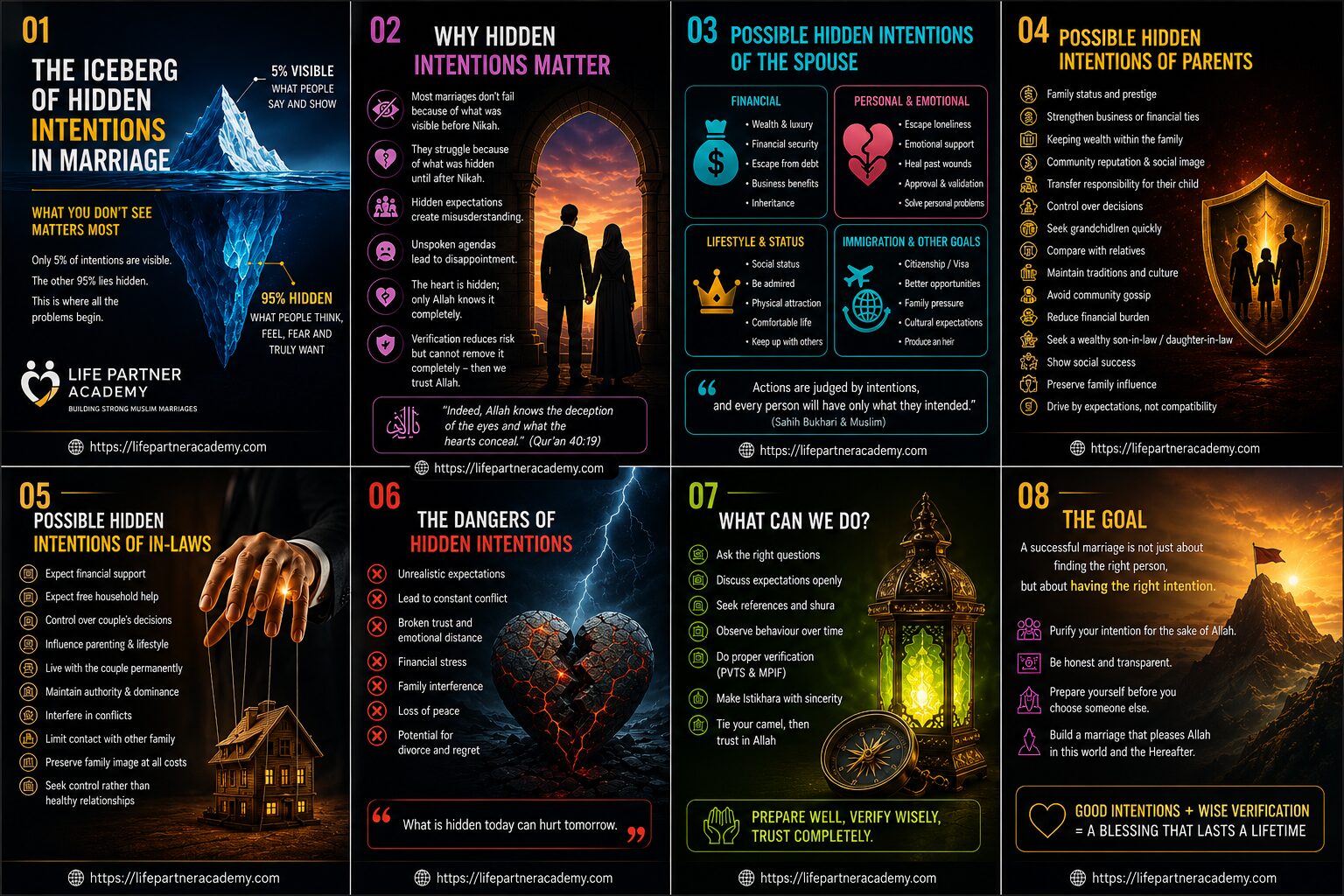
The Iceberg of Hidden Intentions in Marriage
“Marriage doesn’t begin with the Nikah. It begins with the intention in the heart.”
When families search for a suitable spouse, they usually verify education, career, family background, finances, health, and compatibility.
But there is one thing that is rarely discussed—and yet it has the greatest impact on a marriage.
Hidden intentions.
The Iceberg Principle
Imagine an iceberg floating in the ocean.
Only 5% is visible above the water.
The remaining 95% remains hidden beneath the surface.
Marriage is very similar.
What We Usually See
- Education
- Career
- Appearance
- Family background
- Religious practices
- Communication
What Often Remains Hidden
- Intentions
- Expectations
- Assumptions
- Fears
- Personal ambitions
- Emotional wounds
- Family pressures
These hidden realities often shape a marriage far more than the visible qualities.
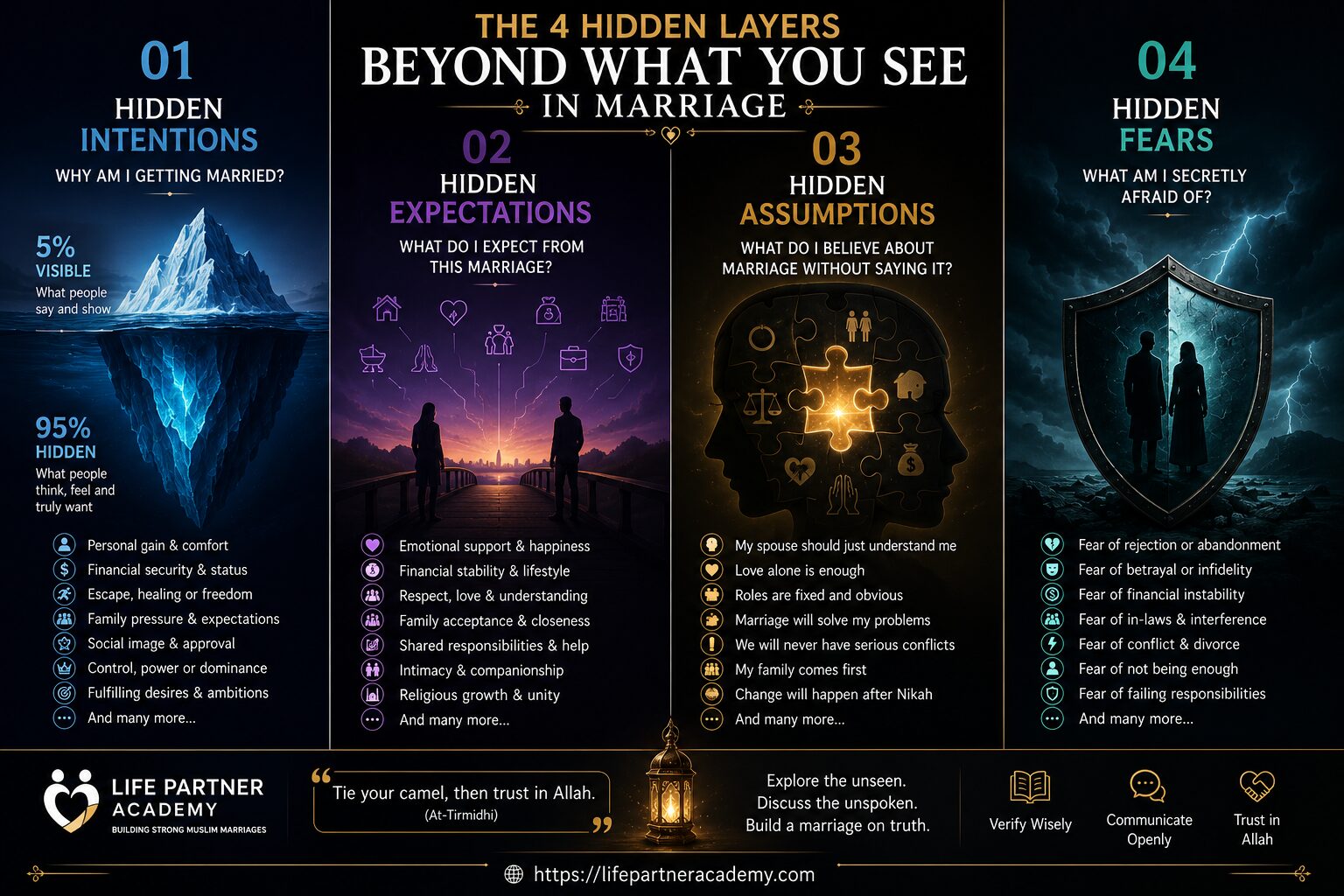
The Four Hidden Layers
1. Hidden Intentions
Why am I getting married?
Possible intentions may include:
- Seeking Allah’s pleasure
- Financial security
- Social status
- Family pressure
- Immigration opportunities
- Emotional dependency
- Escaping loneliness
2. Hidden Expectations
What do I expect from marriage?
Examples include:
- My spouse should make me happy.
- My spouse should understand me without explanation.
- Marriage will solve my problems.
- My family should always come first.
- We should never argue.
3. Hidden Assumptions
What do I already believe about marriage?
Common assumptions include:
- Love is enough.
- Good marriages don’t require effort.
- My spouse will change after Nikah.
- Conflict means failure.
- We will naturally agree on everything.
4. Hidden Fears
What am I secretly afraid of?
Examples include:
- Rejection
- Betrayal
- Divorce
- Financial instability
- Difficult in-laws
- Failing as a spouse
- Making the wrong choice
Why Do Marriages Struggle?
Many marriages don’t fail because people lied.
They struggle because important conversations never happened.
Hidden expectations become disappointments.
Hidden assumptions become misunderstandings.
Hidden fears become silent barriers.
What Does Islam Teach?
The Prophet ﷺ said: “Actions are judged by intentions.” (Sahih al-Bukhari & Sahih Muslim)
Allah also reminds us: “Indeed, Allah knows the deception of the eyes and what the hearts conceal.” (Qur’an 40:19)
Only Allah knows every heart completely.
Our responsibility is to be sincere, ask wise questions, verify responsibly, and place our trust in Him.
The PVTS Approach
The Marriage Proposal Verification System (PVTS) encourages couples and families to look beyond what is immediately visible.
Instead of making decisions based only on appearance or qualifications, discuss:
- Values
- Goals
- Family expectations
- Financial habits
- Communication
- Boundaries
- Religious commitment
- Long-term vision
Honest conversations today can prevent painful surprises tomorrow.
Questions to Ask Yourself
Before asking whether someone is the right spouse, ask yourself:
- Why do I want to get married?
- What expectations am I bringing into marriage?
- What assumptions have I never questioned?
- What fears am I carrying?
- Am I preparing to fulfil responsibilities before demanding rights?
Final Reflection
Marriage is like an iceberg.
What you see above the surface matters.
But what lies beneath the surface often determines whether the marriage survives the storms of life.
Purify your intentions.
Discuss your expectations.
Challenge your assumptions.
Face your fears.
Then, after taking every reasonable step, place your trust in Allah.
Tie your camel, then trust Allah.